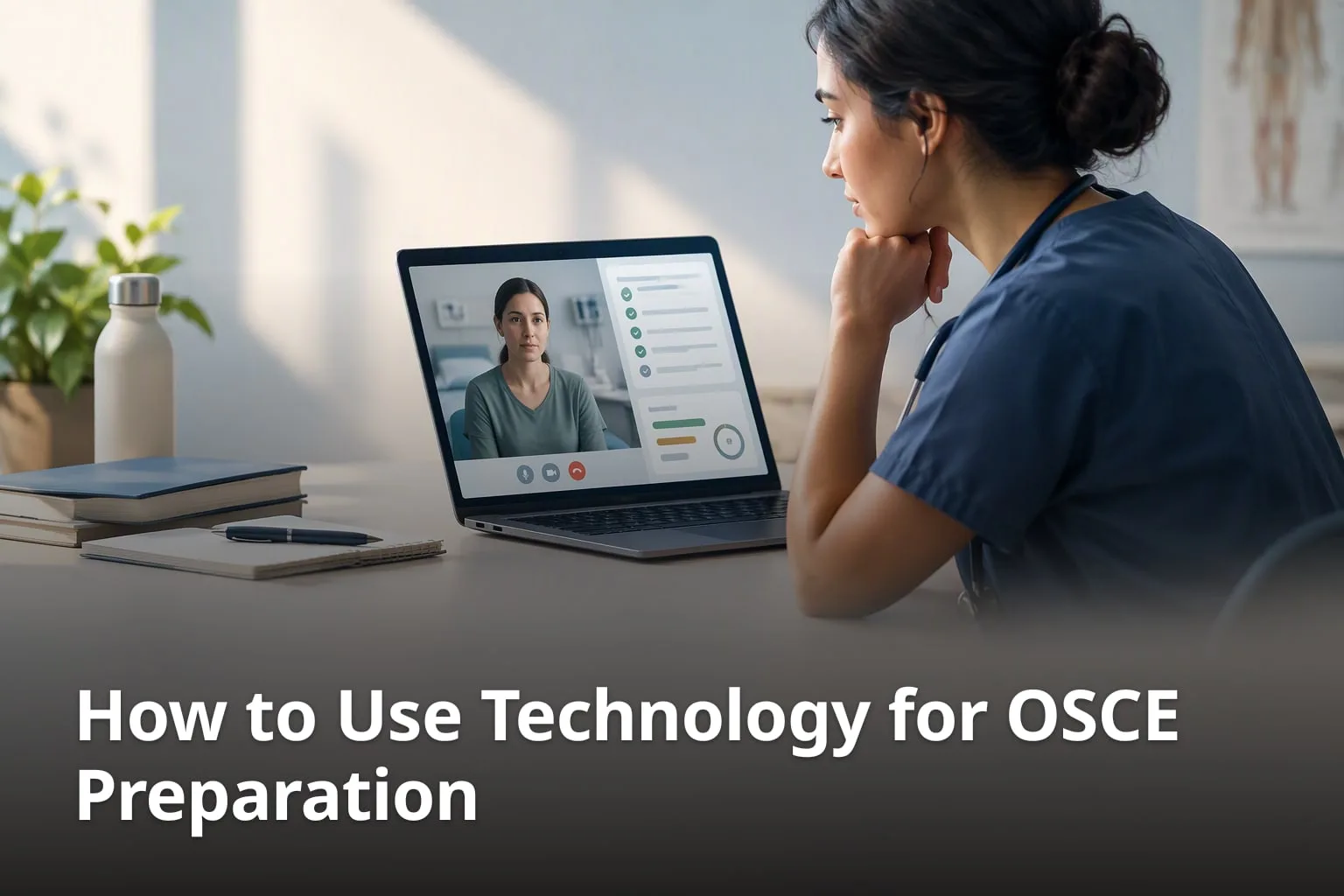
Preparing for OSCEs requires a combination of theoretical knowledge and practical skill application. Technology has emerged as a powerful ally in this area, offering tools that simulate patient interactions, provide instant feedback, and track readiness across clinical systems. By harnessing these technological advancements, medical students can prepare for their OSCEs with greater confidence and effectiveness.
What is the role of technology in OSCE preparation?
Technology plays a pivotal role in OSCE preparation by providing realistic simulations, instant feedback, and structured practice opportunities tailored to the OSCE format. These digital tools allow students to immerse themselves in authentic clinical scenarios, replicating patient interactions and decision-making processes. For example, virtual platforms can simulate diverse patient cases, ranging from routine checkups to complex emergencies, enabling learners to refine their skills across various contexts. By incorporating adaptive learning algorithms, these technologies ensure students receive targeted guidance, addressing their unique weaknesses and building confidence before the examination.
What are the key details to consider?
- AI patient simulators mimic real-life patient interactions.
- Instant feedback highlights strengths and areas for improvement.
- Structured practice aligns with official OSCE checklists.
- Progress tracking helps measure readiness across clinical systems.
- Technology bridges the gap between theoretical knowledge and practical application.
AI patient simulators, such as those offered by Klinico, enable students to engage in realistic history-taking conversations, replicating the experience of interacting with actual patients. By aligning practice sessions with the official OSCE checklist, the simulators ensure that every critical component is covered. Students receive immediate feedback after each case, allowing them to identify areas for improvement without the delay often experienced in traditional methods. Additionally, structured progress tracking provides valuable insights into readiness by system, helping students focus their efforts on weaker areas.
Using advanced technology tools like Klinico can significantly enhance your OSCE preparation by offering a structured, feedback-driven approach tailored to the exam format.
How can AI patient simulators improve OSCE readiness?
AI patient simulators like Klinico enhance OSCE readiness by offering natural history-taking conversations and scoring them against real OSCE checklists with detailed feedback. These AI-driven systems enable students to engage in dynamic interactions where simulated patients respond in nuanced ways, closely mimicking real-life scenarios. For instance, the AI can adjust its responses based on the student’s questioning style or clinical reasoning, fostering deeper analytical thinking. This personalized feedback mechanism not only highlights areas of improvement but also tracks progress over time, ensuring that students consistently refine their skills until they meet clinical standards.
What are the key details to consider?
- Simulates realistic patient interactions for practice.
- Provides scoring based on official OSCE checklists.
- Delivers immediate feedback to refine skills.
- Allows unlimited practice cases for comprehensive preparation.
- Helps students develop clinical reasoning and decision-making skills.
With Klinico, medical students can practice history-taking in a free-text format, just as they would in real-life scenarios. Every interaction with the AI patient is scored against the OSCE checklist, covering essential elements like SOCRATES and ICE. This ensures a comprehensive approach to preparation, enabling students to refine their questioning techniques and learn to identify key clinical information. Feedback is provided instantly, highlighting both strengths and areas for improvement, which allows students to adjust their strategies before the next session.
Unlimited practice cases on Klinico ensure that students can repeatedly refine their skills, building confidence for the OSCE examination day.
Why is instant feedback important for OSCE preparation?
Instant feedback is crucial for OSCE preparation as it enables students to quickly identify mistakes, understand their strengths, and focus on areas needing improvement. This immediate insight eliminates the delays that may hinder progress, allowing medical students to refine their techniques in real-time.
1. Act on feedback immediately after practice.
One of the most significant benefits of instant feedback is the ability to apply corrections right away. Instead of waiting weeks to receive performance reviews, students can instantly understand where they went wrong and adjust their approach in their next session. This ensures that lessons learned are fresh and actionable, leading to more effective and focused practice sessions.
2. Refine clinical reasoning and decision-making.
Immediate insights allow students to evaluate the logic behind their clinical decisions. Feedback often highlights areas like missed red flags or incomplete SOCRATES assessments, giving students a clear direction for improvement. By focusing on these gaps, students can strengthen their ability to make accurate and timely decisions in clinical scenarios, a skill that is critical during OSCEs and real-life patient encounters.
3. Focus on weaker areas.
Targeted practice becomes more effective when students know the specific aspects of their performance that require attention. Whether it's clarifying ICE responses or asking better follow-up questions, instant feedback shapes how students prioritize their learning. This structured approach helps ensure that students address their weaknesses systematically, leading to comprehensive skill development.
4. Track progress to build confidence.
Feedback that measures system readiness or highlights improvement over time helps students build confidence. Seeing their scores improve session by session reassures them that their efforts are leading to tangible results. This sense of progress can be motivating, encouraging students to continue refining their skills with dedication and focus.
Tip: Use platforms like Klinico that deliver itemized feedback aligned with the OSCE checklist for maximum precision in your preparation.
How does Klinico simulate real OSCE scenarios?
Klinico simulates real OSCE scenarios by offering AI patients that respond naturally, structured history-taking modules, and scoring aligned with official OSCE checklists. This combination ensures that students experience realistic practice sessions that mirror the actual examination environment. Beyond simple roleplay, Klinico’s advanced simulations incorporate complex patient narratives, requiring users to navigate nuanced details and make evidence-based decisions. For example, the platform might present scenarios involving overlapping symptoms, challenging students to prioritize diagnostic steps effectively. Such immersive experiences ensure learners develop the critical thinking and interpersonal skills vital for clinical success.
1. Interact with realistic AI patients.
Klinico’s AI patient simulations are designed to mimic real-life interactions. These virtual patients provide natural responses, allowing students to practice free-text conversations just as they would in an OSCE setting. This feature helps bridge the gap between theoretical knowledge and practical application, preparing students for the nuances of patient communication.
2. Follow structured history-taking modules.
The platform organizes history-taking into modules that replicate OSCE stations. Students are guided to ask relevant questions and follow clinical clues, helping them build a comprehensive patient history. This structured approach ensures that students develop a methodical technique for obtaining critical patient information.
3. Receive feedback aligned with OSCE standards.
Klinico grades each interaction against the official OSCE checklist, covering 27 out of 33 items. This ensures that the feedback aligns with actual examination criteria, giving students confidence in their preparedness. By understanding how their performance measures up to standardized benchmarks, students can refine their practice with precision.
4. Learn from cases based on real presenting complaints.
Every case on Klinico is written according to Macleod’s standard and reflects realistic clinical scenarios. This allows students to practice situations they are likely to encounter during their OSCEs. Exposure to diverse complaints ensures that students are well-prepared for the range of cases they may face in their assessments.
Warning: Avoid relying solely on generic study materials. Platforms like Klinico provide tailored scenarios and feedback that are more effective in building clinical reasoning.
What are the benefits of progress tracking in OSCE preparation?
Progress tracking provides a clear view of a student’s readiness across different clinical systems, helping them focus on areas that need improvement before the OSCE. This feature ensures targeted practice sessions that align with their weakest areas. For instance, tracking tools might reveal persistent gaps in a student's ability to perform cardiovascular examinations or communicate complex diagnoses. By highlighting these deficiencies, platforms like Klinico enable learners to dedicate time to specific topics, ensuring balanced preparation across all systems. Additionally, such detailed insights empower educators to provide tailored support, enhancing overall student outcomes.
1. Identify readiness levels for each clinical system
Use tools like Klinico to evaluate your performance across systems such as cardiovascular, respiratory, and musculoskeletal. This segmented tracking helps pinpoint strengths and weaknesses efficiently.
2. Monitor performance trends over time
Review historical data to understand your progress. Klinico provides structured views of your performance across sessions, enabling you to identify consistent trends and areas needing improvement.
3. Focus preparation on areas needing improvement
Prioritize OSCE stations based on your readiness scores. If you struggle with respiratory cases, dedicate more time to practicing relevant scenarios and history-taking conversations.
Tip: Progress tracking not only highlights weaknesses but also motivates students by showing measurable growth over time, creating a sense of accomplishment.
How can technology make OSCE practice more efficient?
Technology improves OSCE practice efficiency by enabling students to practice anytime, receive instant feedback, and focus on critical areas without relying on physical resources. This flexibility makes preparation more accessible and cost-effective. For example, students can revisit challenging cases on demand or simulate rare conditions that might not be feasible in traditional setups. Such adaptability empowers learners to take full control of their preparation, ensuring consistent improvement. Additionally, the integration of analytics tools in these platforms allows students to identify trends in their performance, fostering strategic study plans tailored to their individual needs.
1. Practice on a flexible schedule
With platforms like Klinico, you can work on simulated patient cases anytime. This eliminates the need to coordinate schedules with instructors or physical resources, making practice more adaptable to your routine.
2. Utilize instant feedback to refine skills
Receive immediate insights into your performance after each case. This allows faster learning cycles, helping you address mistakes and improve your clinical reasoning without waiting weeks for feedback.
3. Focus on critical OSCE skills
Technology enables you to concentrate on essential tasks such as history-taking and clinical reasoning. AI patient simulators mimic real conversations, making practice sessions more realistic and relevant to OSCE scenarios.
4. Reduce preparation costs
Traditional OSCE preparation methods, like hiring simulated patients, can be expensive. Leveraging technology such as AI-based simulators offers a cost-effective alternative while maintaining high-quality practice sessions.
Tip: Klinico’s student plan at $10 per month provides unlimited patient cases and detailed feedback, making it an affordable option for efficient OSCE preparation.
Why is realistic practice important for OSCE success?
Realistic practice is essential for OSCE success as it prepares students for the challenges of real patient interactions, clinical reasoning, and decision-making under pressure. Such practice cultivates critical thinking and adaptability, which are indispensable in unpredictable clinical environments. For example, students can engage in simulated scenarios requiring differential diagnosis or urgent care decisions, helping them manage time-sensitive situations effectively. By repeatedly confronting these challenges in a controlled setting, learners build resilience, ensuring they remain composed and competent during high-stakes OSCE examinations.
What are the key details to consider?
- Simulates uncomfortably real scenarios to build confidence.
- Helps students practice decision-making in real-time.
- Prepares students for the dynamic nature of OSCE stations.
- Encourages mastery of clinical reasoning and history-taking.
- Builds familiarity with OSCE formats and expectations.
The Objective Structured Clinical Examination (OSCE) tests a medical student’s ability to apply theoretical knowledge in practical scenarios. Without realistic practice, students may struggle with the unpredictability of patient interactions and the time constraints of OSCE stations. Klinico provides a platform where students can experience lifelike scenarios, enabling them to develop confidence and adaptability for the exam.
Medical students often face pressure to perform under conditions that mimic real-life patient consultations. Practicing with realistic simulations, such as those provided by Klinico, allows students to refine their clinical reasoning and history-taking skills. These simulations are designed to replicate the complexity of OSCE stations, ensuring students are better prepared for high-stakes evaluations.
How does Klinico help medical schools enhance OSCE preparation?
Klinico supports medical schools by providing unlimited practice cases, instant feedback, and progress tracking for students, reducing the cost and complexity of running simulated patients. This innovative platform eliminates logistical barriers associated with traditional simulation methods, such as scheduling actors or preparing physical setups. For instance, Klinico’s virtual environment provides access to a vast library of patient profiles, allowing institutions to offer diverse clinical scenarios without additional resources. Furthermore, its automated feedback system streamlines the evaluation process, enabling educators to focus on mentoring rather than administrative tasks.
What are the key details to consider?
- Offers unlimited AI patient cases for student cohorts.
- Provides instant feedback to improve student performance.
- Tracks progress across sessions for individual and group readiness.
- Reduces reliance on physical simulated patients.
- Supports scalable and cost-effective OSCE preparation.
Klinico offers a scalable solution for medical schools seeking to enhance their OSCE preparation programs. By providing access to unlimited AI patient cases, institutions can ensure every student receives ample practice opportunities without the logistical challenges associated with physical simulations. This is particularly advantageous for larger cohorts where resources may be limited.
The detailed feedback provided by Klinico allows students to identify their strengths and weaknesses immediately after completing each case. This instant analysis is invaluable for educators who aim to track progress across multiple sessions and tailor their support based on individual or group readiness. Klinico also reduces dependency on physical simulated patients, offering a cost-effective alternative that does not compromise the quality of learning.
By integrating Klinico into the curriculum, medical schools can create a structured and consistent approach to OSCE preparation. This ensures students are familiar with the exam format and can confidently approach each station with the necessary skills in clinical reasoning, history-taking, and decision-making.
What is Klinico?
The platform is an AI patient simulator designed for OSCE history-taking practice. It provides realistic conversations with simulated patients and scores them against official OSCE checklists.
How does Klinico improve OSCE preparation?
The platform enhances OSCE preparation by offering realistic patient interactions, instant feedback, and progress tracking, helping students refine their clinical skills effectively.
What types of cases are available on Klinico?
The platform provides cases across various systems, including cardiovascular, respiratory, gastrointestinal, and musculoskeletal, all based on real presenting complaints.
Is Klinico suitable for individual students or medical schools?
The platform is suitable for both individual students and medical schools, offering scalable solutions for unlimited practice cases and structured feedback.
Do I need special software to use Klinico?
No, Klinico is accessible online and does not require any special software installation, making it easy to use for students and schools alike.
Can I track my progress on Klinico?
Yes, Klinico allows you to track your progress across different clinical systems, helping you measure readiness and focus on areas needing improvement.
Start your OSCE preparation journey with Klinico today. Gain confidence, refine your skills, and track your progress effectively. Visit Klinico.co to learn more.
What are the sources?
Which sources support these claims?
- Klinico, https://www.klinico.co/
- Klinico, https://www.klinico.co/features
- Mentor Merlin, https://blog.mentormerlin.com/new-nmc-osce-cbt-pass-rates-in-2023-prepare-for-success/
- MedVision Sim, https://medvisionsim.com/blog/medical-manikin-price-guide
- Healthy Simulation, https://www.healthysimulation.com/human-patient-simulator-cost/
- Elevate Healthcare, https://elevatehealth.net/resources/how-much-do-healthcare-simulation-manikins-cost-a-total-cost-of-ownership-guide/